|
Odalisken från Smolna – The Film that never was – |
| INTRODUCTION | In early 1924, after the success with Gösta Berling Saga. Stiller got an offering from a German film company – Trianon A.G, to direct films for them. In spring 1924 he signed one of three contracts with them. Stiller already had the right story in mind. With his team, he wanted to make a film version of the novel, Odalisken från Smolna. In December 1924, production started in Turkey with Garbo in female leading role. Einar Hansson was signed to be her film-lover and Conrad Veidt as the film-villain. But the German film Company had financial problems and the project was stopped. Trianin A.G. and Stiller tried to rescue the project but a huge public scandal in January 1925 (Trianon and the German ministry) surrounded the project. Finally the film was cancelled. Garbo and Hanson did Die Freudlose Gasse with Pabst instead, Stiller communicated with MGM and after a process in the summer of 1925, Trianon A.G. declared bankruptcy in early 1926. |
|
| ALTERNATE TITLES | The Odalisque from Smolensk (English Title) Die Odaliske von Smolny (German Title) |
Odaliske ( Alternative title) |
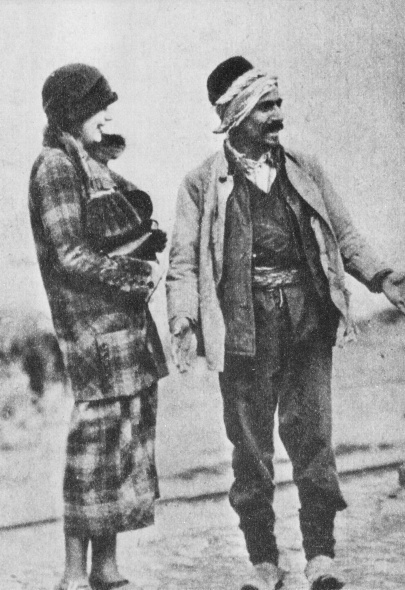
PICTURES FROM THE LOCATION
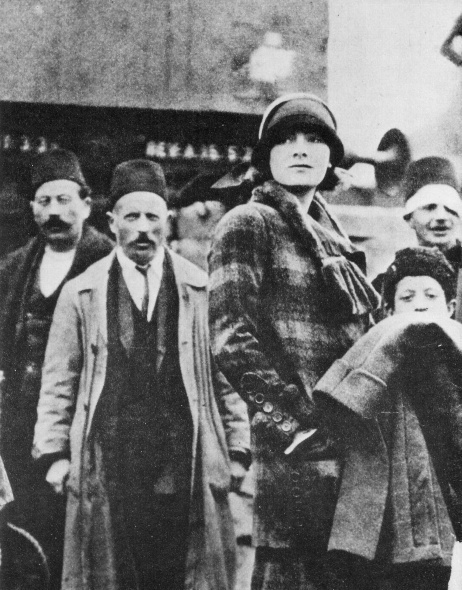 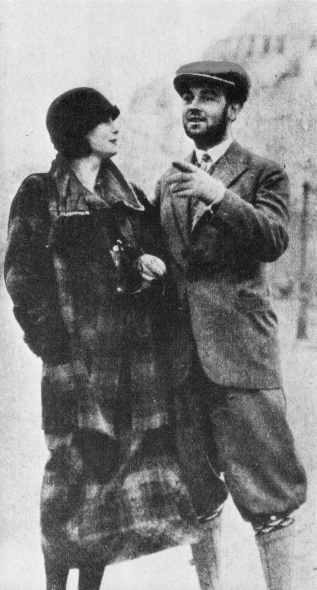 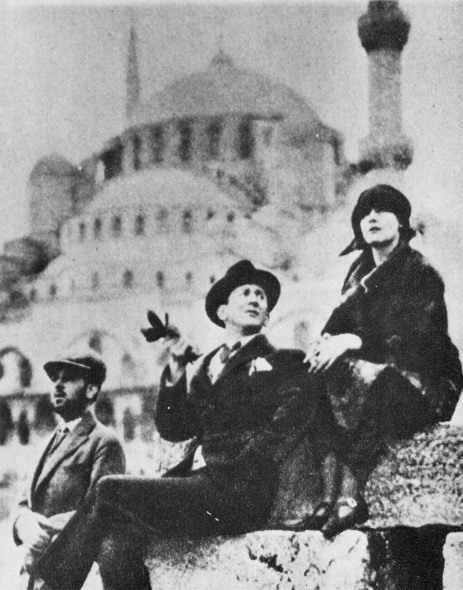  |
||
| COMPANY | Trianon Film A.-G (Producer and Distributer) | Svensk Filmindustri (Distributor for the Scandinavian market) |
| PRODUCTION COUNTRY / YEAR | Germany/Turkey, December 1924 – February 1925 |
|
| CREDITS | Directed by M. Stiller. |
Screenplay Adaption by M. Stiller and Ragnar Hyltén-Cavallius, based on the novel by Vladimir Semitjov. |
| CAST | Greta Garbo Einar Hansson |
Conrad Veidt Mouschin Bey |
| SYNOPSIS | An aristocratic Russian girl, Maria Ivanovna (Greta Garbo), flees from the political confusion of her homeland. She stows away on a ship, hoping to find her lover (Einar Hansson) in Constantinople. But the ship's crew sells her into slavery. She is sold as an odalisque (concubine) in the harem of a Turkish prince (Conrad Veidt). Maria had a terrifying, dramatic escape from her captors. She is involved in the dilemma of whether murdered her Turkish captor. |
|
| GARBO'S CO-STAR | Conrad Veidt (1893 – 1943) was a German actor, well known for his roles in such films as The Cabinet of Dr. Caligari (1920) and Casablanca (1942). The Trianon A.G. signed Veidt for the film.He was going tom play the part of the Turkish prince.
|
|
| RELEASED | Second quarter of 1925 | |
| PRODUCTION | Production dates: December 1924 to February 1925 Production Location: Constantinople/Turkey (Angora Filmstudio) and Berlin/Germany (Trianon Filmstudio) |
|
| TRIVIA |  Was going to be filmed in Constantinople/Turkey from Dec. 1924 to February 1925. An old rumor is that Greta did some location film tests in Turkey. The Location tests are lost and had been Was going to be filmed in Constantinople/Turkey from Dec. 1924 to February 1925. An old rumor is that Greta did some location film tests in Turkey. The Location tests are lost and had beenconfiscated by the Turkey customs office. Rumor is that actor Conrad Veidt never appeared on location in Turkey. But this was also NEVER plannedVeidt was signed only for studio work in the Trianon Berlin Studio. He was planned to film his scenes from January to February 1925. Odalisken från Smolna was first slated to start filming in July or August 1924. This plan was post-phonedin late July and scheduled to be fil in December 1924 to February 1925. In late November of 1924, a new arrangement between Trianon and Stiller was made. It
allowed GöstaBerlings saga to be substituted as the first film under Mauritz Stiller's contract. It is rumored that Stiller paid Vladimir Semitjov only 200-300 Kronas for the rights. In July 1924, before he went to Turkey with Greta in December, Stiller did film tests in the Razunda studios(Solna/Stockholm). It is not known if Garbo did tests for the film in Razunda. Greta signed the final deal probably in late October 1924. She was paid 5,000 Kroner per month and6,000 Kronas were paid before production started. Production budget was around 400, 000 – 450,000 Kronar (mentioned in the final contract)--the biggestand most expensive Trianon production. |
|
| STILLER’S CONTRACTS | Stiller’s first contract, dated April, 1924 Stiller’s first contract, said to be quite ‘loose’: 1. 100,000 Kronas 2. 30% from the NET cash 3. A guarantee of 50,000 Kronas on the second option. 4. The right to make distribution contracts in Scandinavia on his own 5. A car 6. Charges out of Berlin and Stockholm 7. The contract did not mention any production costs, Cast, plots, co-workers. Stiller’s second contract, May 1924 A second pre-contract was made in May: 1. His service to start production between July – August 1924 for the first film 2. Script was already in production (Odalisque) 3. He was going to do four films 4. 75,000 Kronas for the first two and 100,000 Kronas for the second two 5. The license to distribute the films for Scandinavia. 6. Further details, charges etc were planned to be explained in a second contract. Stiller’s third contract, October 1924 After all the financial problems, Stiller agreed or offered Trianon to co-produce the film. Stiller would co-finance the film and signed a new deal with them in October 27th. The contract is lost, but it was for only ONE film – The Odalisque. The deal started in 31th of October and ended with the finished production. He got paid 85,000 Kronas, 31,000 Kronas before production started. |
|
| BUSINESS DATA | Budget: 400, 000 – 450,000 Kronar | |
| RARE COSTUME PICTURE | 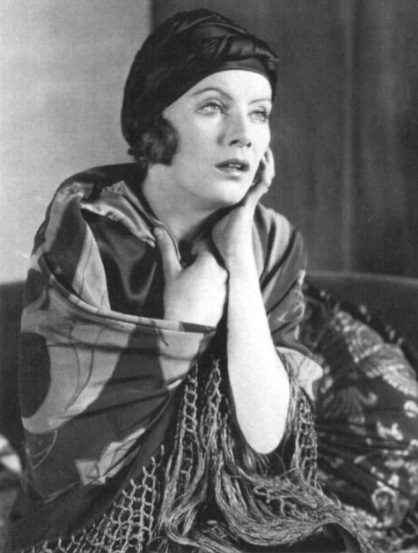 Garbo in costume? Some sources claimed that this was a Still from the film. Not true, it is from Torrent. |
|
| BACKGROUND STORY | Introduction On March 1924, Gösta Berling Saga premiered in Stockholm. After that, the director got an offer from a German producer named David Schratter. He asked Stiller if he would be interested in making some films for Trianon Film A.-G (German production company). Schratter also wanted to buy the German distribution rights for Gösta Berling Saga. Both men met in Berlin, early April, and signed a deal for the German Gösta Berling Saga distribution rights and two movies by Stiller for Trianon. The Odaliske film Stiller was already considering his next project: a story of Russian refugees trapped in Turkey. He had recently read this story in a melodramatic Stockholm newspaper serial, written by Russian refugee Vladimir Semitjov. He bought the screen rights in early 1925 for ca. 200 Kronas, and reworked it into a script - The Odalisque from Smolna. It was about a girl who gets caught up in the Russian civil war. She flees Sevastopol and crosses the Black Sea to Constantinople in search of her fiancé. She is drugged and sold into a Turkish harem. Her escape is one of many breathtaking adventures. Stiller had convinced Trianon to produce the film in Turkey. He believed that the exotic backgrounds, crowds and constant sunshine could be obtained for free. Trianon was impressed and wanted him to do it. Start Date The director sent Greta a letter and told her not to make any plans for the summer of 1924. He wanted to start shooting in summer of 1924. But this plan was later postponed and Stiller had to renew and sign the contract in Berlin. In August, Greta and Stiller went to Germany for the premiere of Gösta Berlings Saga in Berlin. The film was a big success and Stiller sorted out new deals with Trianon. In early September 1924, Trianon executive David Schratter gave Stiller his okay. He told him not to worry about anything and that the company intended to let him make his film the way he wanted. Further financial problems came up, and Stiller agreed in late October, to co-produce the film. The start date for filming was now early December 1924. Constantinople On the 26th of November, Stiller and Garbo came back to Berlin. They also met Mayer (MGM) in the hotel Adlon. Stiller arranged a private screening of Gösta Berling Saga and they made a verbal agreement to start a career in Hollywood. No contract was signed. Then on November 27th Stiller and his team went to Constantinople with 120,000 Mark in his pocket. They arrived November 30 at the elegant hotel, and it is said that Stiller was very slow with the production. Another mistake was that they did not get permission from the Turks to film there. So, Stiller delayed day after day, had a meeting with the Swedish ambassador in Turkey, and worked out a deal with the Turkish studio Angorafilm, establishing a studio there. Stiller also arranged for cameras and technical equipment to be brought from Sweden to Constantinople. Financial problems After only two weeks, Stiller and his team had financial problems and couldn’t continue working on the film. Stiller sent telegrams to Trianon but they ignored him. Around Christmas time, Stiller went back to Berlin. He found out that he could not go forward with his film and wasn't free to make new plans. When Stiller arrived he tried to put pressure on the financiers. A letter was written to the main financier, Wohnstätten GmBH, demanding that they deliver the promised sum of 450,000 Mark by Dec. 29. A new agreement was made and Stiller could have gone on with the Odalisque production. Greta on hold Greta and the others were still in Constantinople. She spent her first Christmas away from home. She was invited to the Swedish consulate several times and went to parties there twice. On New Year's Eve, she went to a party in an Oriental gown. It was of red and gold silk, Stiller had purchased it for her. Garbo was now waiting for Stiller and hoped that they could start filming soon. A Scandal Now something unexpected happened: Schratter received a long letter from the publisher of two famous German movie magazines and a huge publishing house. His name was Karl Wolfssohn. He claimed to believe a huge scandal around Trianon. He wrote that they used credits from Wohnstätten GmbH, and they in turn gave them to a third party. He wanted further details from Schratter, some clarification. The accusations were not true but Wohnstätten GmbH stopped further credits to Trianon after they saw the letter. They feared a political scandal and legal repercussions. All this happened with increasing poverty and a housing shortage. If Wolfssohn published this, it would have hurt not only the Wohnstätten GmbH but also the housing companies in Germany and the film industry. The Trianon / Housing Company connection could turn into a huge political fiasco. Wolfssohn published the story on January 3, 1925. Before that, he took legal action against Trianon and Wohnstätten GmbH, and contacted the German Ministry. A legal process was scheduled for June 1925. Rescuing the project The company had money problems and was surrounded by public disgrace, but still it was possible to find a way to save both (film and company). While this situation was ongoing, Stiller, Wohnstätten GMBH and Trianon still wanted the film to be realized. Stiller asked Svensk Film Industry if they wanted to step in and Schratter tried to sell Gösta to England. But he had no success. Stiller was advised by lawyers in Berlin that Trianon might attempt to collect on any film he did not direct for them in Germany. Stiller now had an uncertain contract and a number of unpaid bills. He did the next best thing and disregarded Trianon's claim to not sell Garbo's contract to G. W. Pabst who wanted her and Hanson for the Sofa-Film Die Freudlose Gasse. Stiller sold the services of Garbo and Hanson to G. W. Pabst. Die freudlose Gasse On January 20, 1925, Greta received a telegram from Stiller. He told her that it was impossible to go on with the film. Stiller wanted her to pack his things and take care of the visa. He let her know that he would send money to the Swedish consulate. Stiller sent her $500, so she and Einar Hansson could travel back. Greta was shocked when she heard that they would not make the film as planned. Greta arrived in Berlin on January 23. Next week she met with Pabst and his producers. They talked about her role in Die Freudlose Gasse. The movie was going to be shot between February 12 and March 26, 1925. But Odaliske was not yet cancelled as many writers continued. In between, Stiller had several offers from other companies, including UFA, Svensk Film industry and….MGM. Officially Cancelled In February, while waiting for the legal decision, the Wohnstätten GmbH now had money problems (around 2,2 Mio Mark in all). Due to the bad public image, their shares had lost their worth. Schratter even said he would step down as the executive and a rumor appeared that Joe Schenk of UNITED ARTISTS wanted to buy the company. Nothing turned out that way and the movie was officially cancelled later that month. The process ended on July 12, after 17 days. All parties were acquitted. Schratter did not ‘hide’ in Paris and he did not go into bankruptcy at this time. Why the film was not made We can blame all three parties. Stiller’s and Schratter’s inept and naïve production plans, poor organization, plus the politics of the financiers from the Wohnstätten GmbH. But the main reason why the movie was cancelled in the end was the bad press during the scandal and of the course the influence of Wolffsohn. Hollywood’s version Odaliske After Stiller and Garbo came to Hollywood in summer of 1925, he translated Odalisken från Smolna into English. He wanted to direct this film in America as Garbo's debut, but MGM didn't like it. The proposal had to be dropped and Greta was to do her first MGM film, The Torrent. The Odaliske from Smolny (English title)was never made. Trianon after legal process After the legal decision they went on for some time. In the end of August 1925 they announced further films for the season 1925/1926. They even considered four Swedish Films. Sadly, now they were on the verge of bankruptcy and on February 6, 1926 they filed for it. The Schratter brothers did not attend the trial. The Berlin police reported that they left Germany in early March, 1926. On May 14, 1928, the TRIANON FILM AG lost their listing in the register of companies. The Wohngruppen GmbH was still active until the late 1960s. |
|
| THE ORIGINAL NOVEL | Based on the novel Odalisken från Smolna by Vladimir Semitjov. | |
| MORE INFO | Further info about the project can be found in these books/novels:  Garbo Filmen Vi Aldrig Fick Se (Sweden 1986) – by Eugen Semitjov.  In Pursuit of a Vanishing Star (USA 2002) by Gustaf Sobin.  Bilder vom Norden. Schwedisch-deutsche Filmbeziehungen 1914-1939 (Germany 2006) by Patrick Vonderau |
|
| THE 1936 DAVID SCHRATTNER LAWSUIT | In August of 1936, producer David Schratter was filing a lawsuit. He charged that in 1924 he had loaned Garbo sums in excess of $10,000 and had never been paid back. The suit had been dismissed due to a lack of proper showing and a new hearing was scheduled for May 3, 1937. MGM lawyers filed a motion to delay the proceedings, ‘cos of the release of Conquest. Schratter’s suit was abruptly dismissed on June 16 without any indication of its resolution. Garbo denied ever borrowing money from Schratter. As to whether or not Stiller might have asked for an advance on her behalf, Greta stated that she was unsure exactly what business had been conducted – only that the film she and Moje were hired for was never made. “I was merely a young actress working in a picture, and the people in it, like me, were merely put on a train and taken along,” she testified. “How we were paid, I don’t know. Mr. Stiller was handling all my business affairs.” Because of her absolute reliance on and devotion to Moje, Greta had no idea that she never collected a salary for her time on location in Constantinople. |
|
SOURCES |
||
|
Karen Swenson – A Life Apart Barry Paris – Garbo Patrick Vonderau – Bilder vom Norden plus many other books, magazines and internet sites. |

© Copyright 2005 – www.GarboForever.com – Germany – TJ & John – The Webmasters